Readings: Pluribus as a metaphor for Autism
SPOILER ALERT: Readings is a name I am trying out for any articles exploring the themes of a piece/pieces of art from a specific perspective. There will be spoilers therein.
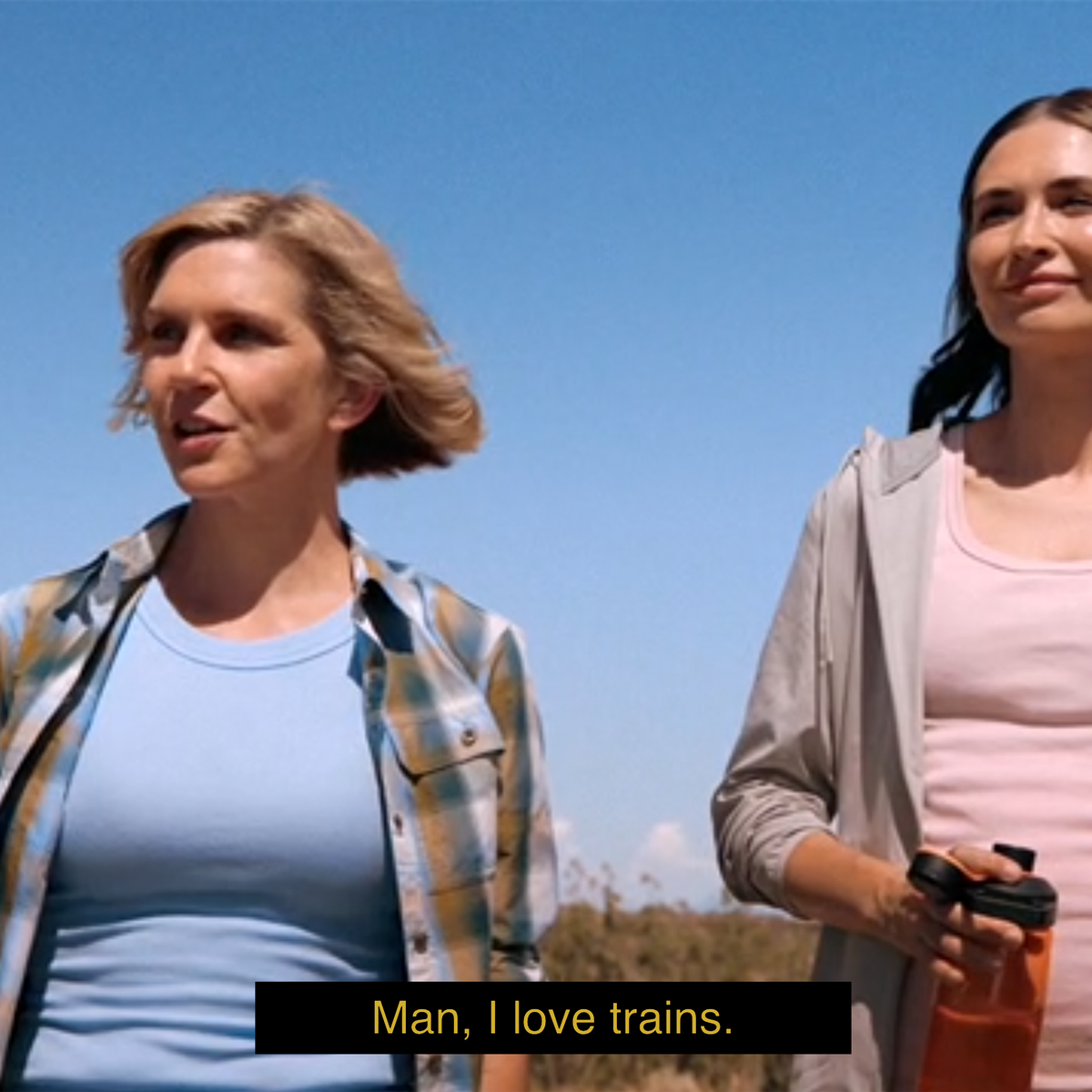
Pluribus is the newest show created by Vince Gilligan (Breaking Bad, Better Call Saul). Season one concluded recently, and I've never seen anything like it. Gilligan's trademark slow-burn exploration of mundane human behavior is turned on its head in a world that breaks all rules of normalcy. An alien virus turns humanity into a hive-mind (The Joined), save for a handful of unjoined folks left to cope with this eerily pleasant post-apocalyptic world.
Very few details were released before the show's first episode, and the show did not hand over answers easily, deftly turning tropes of long-form television on their heads. Are The Joined villains? Is Carol a hero, anti-hero, or villain? How do you keep narrative tension when most of the time there are essentially only two characters interacting, and only one of them has an agency that allows for the ambiguous irrationality of humanity? Where can the plot possibly go? But the biggest launching point of discussion was about the meaning of the show. Gilligan is clearly making a statement here, but what is it?
Many were a bit concerned after the first few episodes, as it is fairly easy to project an anti-vax reading onto the show. If we didn't know as much as we do about Vince Gilligan, it would be hard to find fault with that perspective. But Pluribus is much more complex than that. It is not a metaphor itself, but a venue for metaphor. This world is so unlike our own, yet so similar, that those differences and similarities can be used to analyze any number of societal concerns. This show, at least so far, seems far more interested in provoking reader response than insisting on authorial intent.
It's easy to see the show as an analysis of loss and mourning. In the first episode, Carol's wife dies during the joining. Everything after - the feelings of rage at how the world keeps moving, the alienation of feeling like everyone else is undeservedly happy, Carol's move through the five stages of grief - certainly validate that idea. It also interrogates whether it is better to be miserable or to conform, while acknowledging the differences in that perspective across cultural mores that range from staunchly individualistic to deeply communal. It is, overall, an infrastructure for exploring otherness as a concept.
For me, I am mostly enamored by the way the show mirrors the Autistic experience.
Carol finds herself in a world filled with people who look and act like her, but who all share one intuitive mind that she cannot sync with. They perform kindness but lack deep empathy, claiming to care about Carol, but enacting that care through pity, condescension, and an insistence that Carol change to join them. She is baffled by their behavior - horrified, yet curious - eventually filling a whiteboard with attempts to understand them.
They treat Carol with a detached and patronizing attitude that is enormously frustrating to her. When she melts down, she is painted as the problem, shamed for hurting them with no reflection on how their actions might adjust to better accommodate her neurotype. This just deepens the alienation and leads to Carol lashing out repeatedly, worsening the problem.
Carol often has a bitter, affectless presentation. This is not undeserved, yet it is viewed by The Joined as a problem of her perspective. There are others like her, but they are more able to adjust to this world and thus reject her, a kind of Stockholm Syndrome that, sadly, affects a lot of (often undiagnosed) Autists. Her inability to perform the thoughtless happiness of all those around her is condemned, seen as a flaw in her rather than a rational reaction to an irrational, othering situation. While this is a near-universal Autistic experience, it is one that is especially burdensome on Autistic femme and queer folk (two identities which Carol also claims). It's not that big of a reach to see Koumba Diabaté's nonchalance as a statement on the ways Autistic men are punished less for their deviance from social norms.
There are constant communication issues where Carol speaks in ways that seem obvious to her (and the viewer), yet are met with confusion and misinterpretation by The Joined. For many, this is a great horror. For Autistic folk, it is everyday life. And when she has one too many meltdowns in the face of this difficulty, The Joined leave her alone in Albuquerque. Through context, I understood this to be an incredibly disturbing scene, but I had the same reaction as Carol did initially: a feeling of intense relief. In a parallel to how social reclusion can be initially comforting but painfully lonely at the same time, Carol eventually apologizes and adjusts to regain a level of human contact that is comforting, yet never satisfying.
Carol's fantasy romance novels have a deeply committed fanbase, though she seems to resent both them and her work's success. She feels like a failure for not writing "real" literature, yet when Zosia shows a deep interest in Carol's mind and her creations, we see, for the first time, a sense of joy and excitement in Carol. Those moments of being seen and appreciated for who we are can be deeply validating, and it can lead to us opening up in ways we'd long buried, only to be hurt again when we're met with the same failure of expectation. Her and Zosia begin a relationship built on this delusion, one that breaks down when Carol realizes she is still seen as a thing to be fixed, rather than appreciated as she is.
Manousos' arrival only deepens the metaphor in my opinion. Here is a man who is steadfast in his ethics to a stubborn degree that nearly kills him. This pedantry is a common strength and weakness of Autists. He is suspicious of the rest of the world and is willing to hurt himself to avoid relying on them.
While connecting with other Autists can be rewarding, it also brings with it unique challenges. Autists are trained from early childhood to mask the many parts of ourselves that cause discomfort in others. We go through life trying to learn what is expected of us and how to perform humanness correctly. Dismantling that mask is a long, difficult process, and it often means that two Autists can have communication issues stemming from each individual's unique failures at performing normativity combined with a habit of assuming neurotypical motivations in others. When that can be worked past, deep bonds can be achieved, which I anticipate the two characters exploring in future episodes.
As I said above, this is not meant to be a prescriptive analysis. Great works of art transcend easy explanation, encouraging a two-way relationship between creator and consumer that perpetually uncovers new depth. With Pluribus, Gilligan and crew have built a painstakingly constructed world that places it among the greats of science fiction. It is a sandbox for the germination of ideas, rather than a polemic. Is my reading intentional on the part of its creators, or am I projecting it? Does it really matter? The show mirrors the Autistic experience in deeply profound and satisfying ways, illustrating the power and import of great art.
I hope we don't have to wait too long for season two.